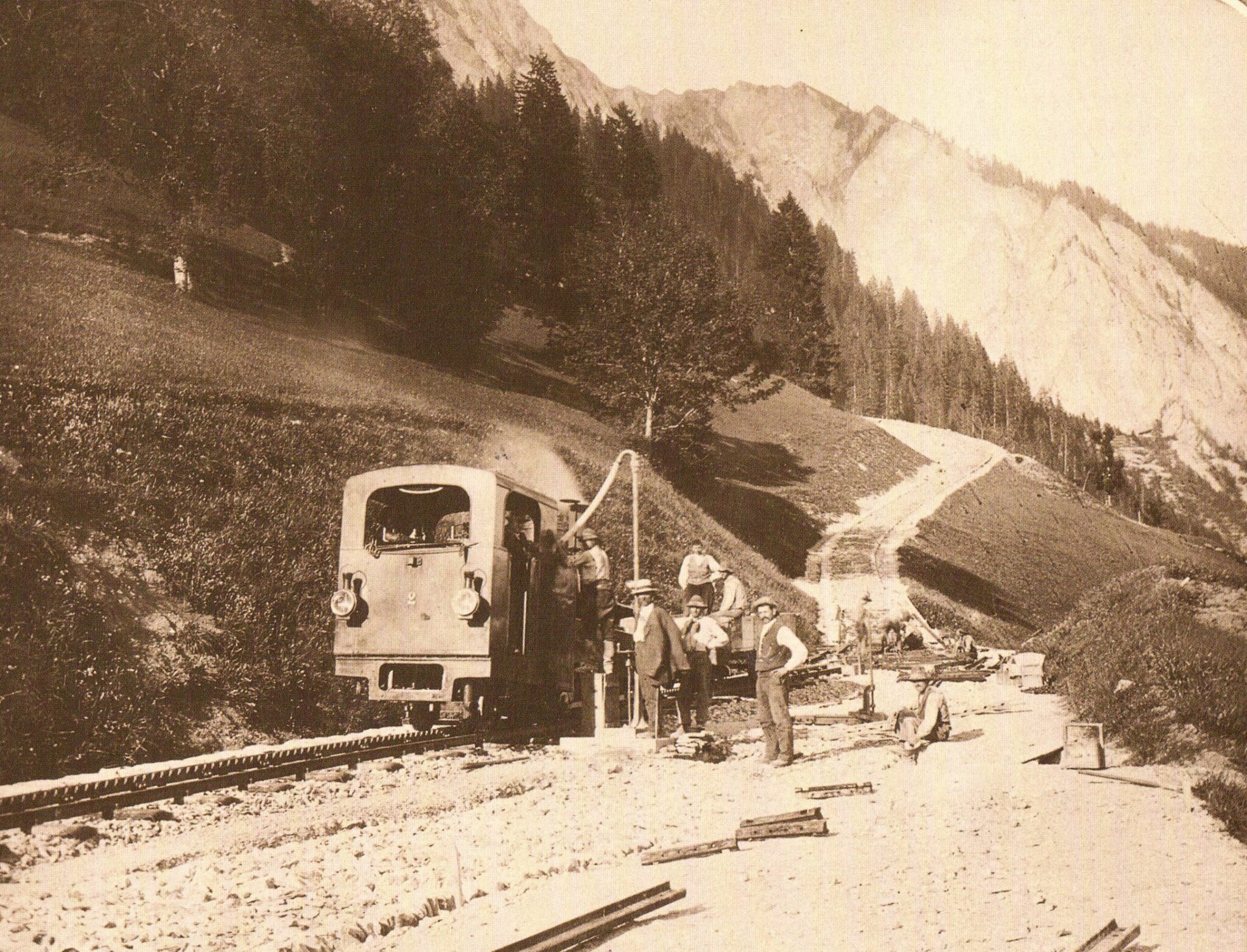
1st generation steam locomotives - built in 1891/92
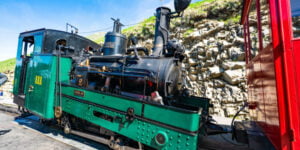 H2/3 - Engine 1-5
Two of the five first-generation coal-fired steam locomotives are still in regular service today. A first-generation steam locomotive consumes 300 kilograms of coal and 2,000 liters of water for a return trip between Brienz and Rothorn. A locomotive driver, stoker, and train attendant are required to transport a maximum of 40 passengers.
| Engine 1 | 1891 | since 1962 BRB - 1941 - 1961 MG (previously GN) |
| Locomotive 2 - regularly in use | 1891 | BRB |
| Engine 3 | 1892 | BRB (reserve) |
| Engine 4 | 1892 | BRB (reserve, exhibition locomotive) |
| Locomotive 5 - regularly in use | 1891 | since 1912 BRB (previously WAB) |
| Firing | Coal |
| Consumption per return trip | 300 kg coal |
| 2'000 liters of water | |
| Service weight | 17'000 kg |
| Empty weight | 14'000 kg |
| Boiler pressure | 14 bar |
| Kettle | 1'000 liters |
| Water supply in the box | 1'200 liters |
| Coal supply in the box | 550 kg |
| Performance | 230 HP |
| Procurement costs (1892) | CHF 42'000.00 |
2nd generation steam locomotives - built in 1933/36
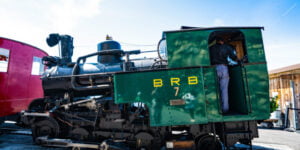
H2/3 - Locomotive 6 and 7
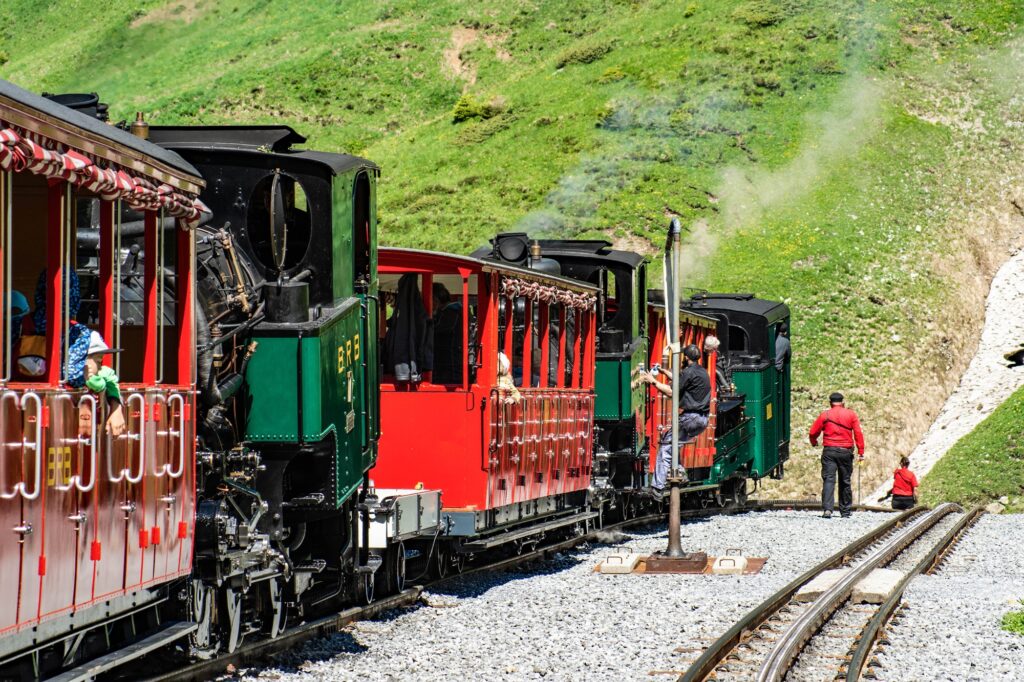
The two second-generation coal-fired steam locomotives are in regular service. A second-generation steam locomotive consumes 350 kilograms of coal and 2,000 liters of water for a return trip between Brienz and Rothorn. A locomotive driver, stoker, and train attendant are required to transport a maximum of 72 passengers.
| Locomotive 6 - regularly in use | 1933 | BRB |
| Locomotive 7 - regularly in use | 1936 | BRB |
| Firing | Coal |
| Consumption per return trip | 350 kg coal |
| 2'000 liters of water | |
| Service weight | 20'000 kg |
| Empty weight | 16'700 kg |
| Boiler pressure | 14 bar |
| Kettle | 1'050 liters |
| Water supply in the box | 1'500 liters |
| Coal supply in the box | 550 kg |
| Performance | 300 HP |
| Procurement costs (1936) | CHF 67'000.00 |
3rd generation steam locomotives - years of construction 1992/96
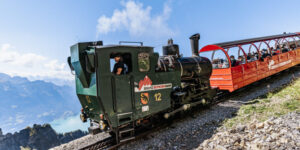 In 1988, the Brienz Rothorn Railway ordered a new locomotive Brienz Rothorn Railway Swiss Locomotive and Machine Works Winterthur. The new steam locomotives, which were designed from scratch, enable a modern operating concept that significantly improves efficiency compared to the previous coal-fired steam locomotives. They are fueled with low-sulfur heating oil. Thanks to the installation of a dead man's switch and vigilance device, one-man operation is possible. Whereas coal-fired steam locomotives required three crew members (engine driver, stoker, conductor) to transport 40-72 passengers, the new steam locomotives could transport up to 104 passengers with only two crew members (the stoker was no longer needed). The new steam locomotives perform this service every two hours, while the old steam engines can be used every two and a half hours.
| Locomotive 12 | 1992 | BRB |
| Locomotive 14 | 1996 | BRB |
| Locomotive 15 | 1996 | BRB |
| Locomotive 16 | 1992 | BRB since 2004 |
| Firing | Heating oil |
| Consumption per return trip | 150 liters of heating oil |
| 2'000 liters of water | |
| Service weight | 15'700 kg |
| Empty weight | 13'200 kg |
| Boiler pressure | 16 bar |
| Water in the boiler | 1'200 liters |
| Water supply in the box | 1'400 liters |
| Oil tank | 560 liters |
| Performance | 408 HP |
| Procurement costs (1992) | CHF 1'800'000.00 |
| Procurement costs (1996) | CHF 2'100'000.00 |
Diesel hydrostatic locomotives
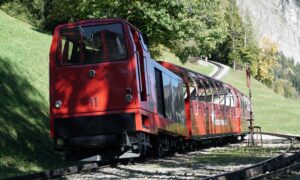
HM 2/2 - Locomotive 9, 10 and 11
The first diesel locomotive (No. 8) of the Bernhard engineer type is delivered at the end of April 1973. It was built in the depot of the Monte Generoso Railway in Capolapo. After test runs with service and freight trains, the Federal Office of Transport approved its use with a passenger coach in the fall of 1973. Two further diesel locomotives (Nos. 9 and 10) were ordered from the Ferdinand Steck machine factory in Bowil in 1974 at a fixed price of CHF 400'000 each and were put into service just one year later. Today, our diesel locomotives are mainly used for rail services. In the event of high passenger numbers or technical failure of a steam locomotive, diesel locomotives may be used for passenger services.
| Engine 9 | 1975 | BRB |
| Engine 10 | 1975 | BRB |
| Engine 11 | 1987 | BRB |
| Fuel | Diesel |
| Service weight | 13'550 kg |
| Tank capacity | 150 liters |
| Power, MTU diesel engine | 660 HP |
| Procurement costs (1975) | CHF 450'000.00 |
| Procurement costs (1987) | CHF 1'000'000.00 |